
Great interviews rarely happen by accident.
Whether you host a podcast, run a YouTube channel, or occasionally bring guests into your show or live stream, the difference between a forgettable interview and a memorable one usually comes down to a single thing: the quality of the conversation.
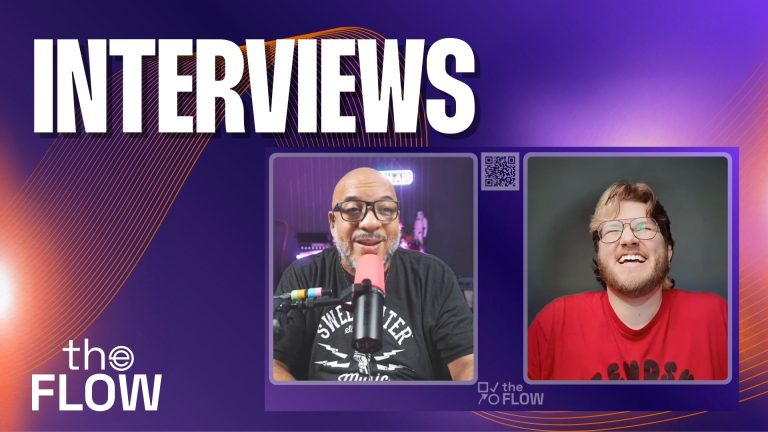
This month on The Flow, Doc Rock and Katie are diving into the art of interviewing. Not just the mechanics of asking questions, but the mindset that helps hosts create conversations that reveal something genuinely interesting and valuable for their audience.
If you’ve ever worried about what questions to ask, how to keep a conversation flowing, or how to avoid awkward interviews, the good news is that the foundation of great interviewing is much simpler than people think.
Curiosity Is the Real Superpower
Many creators assume that interviewing requires a special talent or professional training. In reality, the most important skill is much more basic.
Curiosity.
Doc Rock, who has conducted thousands of interviews over the years, describes curiosity as the engine that powers great conversations. When you’re genuinely interested in your guest, you naturally listen more carefully, ask better follow-up questions, and notice details that others might miss.
A curious host doesn’t just move down a checklist of questions. They follow the thread of the conversation.
Sometimes that means abandoning your planned questions entirely because the guest mentioned something unexpected that deserves deeper exploration. Often, that’s where the most interesting insights appear.
Or, as Doc jokes, curiosity is just a polite way of saying you’re a little bit nosy—and in interviewing, that’s actually a strength.
The Small Mistakes That Ruin Interviews
Once you start studying interviews, it becomes hard to unsee the mistakes.
You’ll notice when a host interrupts a guest right as they are getting to the most interesting part of their story. Or when a host is clearly waiting for their turn to speak instead of actually listening.
These moments break the rhythm of a conversation and remind the audience that the interview is being managed rather than experienced.
Strong interviewers do the opposite. They create space for their guests to think, reflect, and finish their ideas. They listen closely enough to catch small details and turn them into meaningful follow-up questions.
The best interviews feel less like a performance and more like a discovery happening in real time.
Interview vs Conversation
There has always been a debate in podcasting and broadcasting about how structured interviews should be.
Traditional interviews often follow a prepared list of questions. In many cases, those questions are shared with the guest ahead of time so they can prepare thoughtful responses.
While this approach can help guests feel comfortable, it also has a downside. Prepared questions often lead to prepared answers, which means audiences hear the same stories repeated across multiple shows.
That’s why many modern creators are shifting toward a conversational style.
Instead of rigidly following a script, the host guides a discussion and lets it evolve naturally. This approach often produces more authentic stories and perspectives because the guest isn’t reciting something they’ve said dozens of times before.
The goal becomes uncovering ideas that aren’t easily searchable or predictable. When an interview reveals something new or unexpected, it becomes far more compelling for the audience.
The “Fly on the Wall” Effect
One reason conversational interviews resonate so strongly with audiences is something Doc describes as the “fly on the wall” effect.
People love the feeling of listening in on a fascinating conversation.
When hosts and guests focus on each other instead of performing for the camera, the audience begins to feel like they’re sitting in the room with them. The dynamic becomes more intimate and natural.
Instead of watching a staged interview, viewers experience a real exchange between two people exploring ideas together.
That sense of authenticity is what keeps people watching, listening, and coming back for more.
Teaching Without Feeling Like a Lecture
Great interviews also have a unique ability to teach without sounding like a lesson.
Doc uses a simple analogy. If you need to give a dog medicine, you hide the pill in their food so they don’t realize they’re taking it.
Educational content works the same way.
If information is delivered in a dry, academic way, audiences often disengage. But when the same insights are embedded inside an engaging story or conversation, people absorb the knowledge without realizing they’re learning.
Great interviewers are skilled at weaving ideas, lessons, and insights into compelling discussions that feel entertaining rather than instructional.
Getting Better Through Practice
Like any creative skill, interviewing improves with practice.
There’s no shortcut to becoming comfortable guiding conversations, asking thoughtful follow-ups, and finding your own style as a host. The only real path is repetition.
That’s why The Flow is dedicating an entire month to interviews. The series explores not only the mindset behind great conversations, but also provides opportunities for creators to practice and experiment with their own interviewing skills.
Over the coming weeks, the series will cover:
- The mindset and approach that make interviews more engaging
- Insights from experienced interviewers
- Hands-on practice sessions to build confidence
- Community discussions and audience questions
The goal is simple: help creators get comfortable enough with interviewing that great conversations start happening naturally.
A Few Principles to Keep in Mind
If you’re looking to improve your interviews, a few simple principles go a long way.
Lead with curiosity.
Ask questions that genuinely interest you, not just ones you think you’re supposed to ask.
Avoid the obvious.
If the answer is easily found on someone’s website, dig deeper.
Let the conversation breathe.
Listen carefully and allow the discussion to unfold naturally.
Focus on discovery.
The most memorable interviews reveal something new for both the host and the audience.
And most importantly, keep practicing.
Why Interviews Matter
Interviews are one of the most powerful formats in content creation. They allow creators to explore ideas, share expertise, and build relationships in ways that solo content often can’t replicate.
They also create moments of spontaneity and insight that scripted content rarely produces.
When done well, an interview becomes more than just a conversation. It becomes a shared experience between the host, the guest, and the audience.
And it all starts with curiosity.